Nivolumab plus ipilimumab as first-line therapy of advanced renal cell carcinoma
03/08/2026
Cibisatamab and FAP-4-1BBL in microsatellite-stable metastatic colorectal cancer
31/08/2026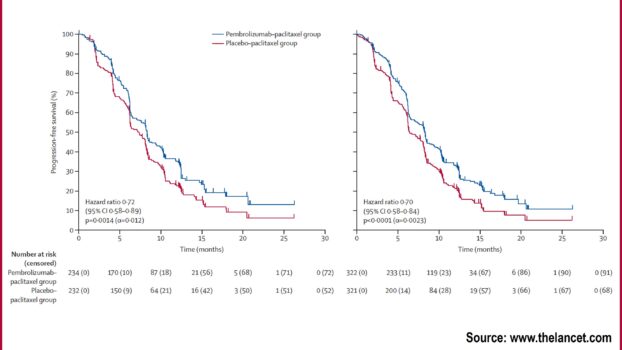
Pembrolizumab plus weekly paclitaxel, with or without bevacizumab, improved progression-free survival and overall survival in patients with platinum-resistant recurrent ovarian cancer
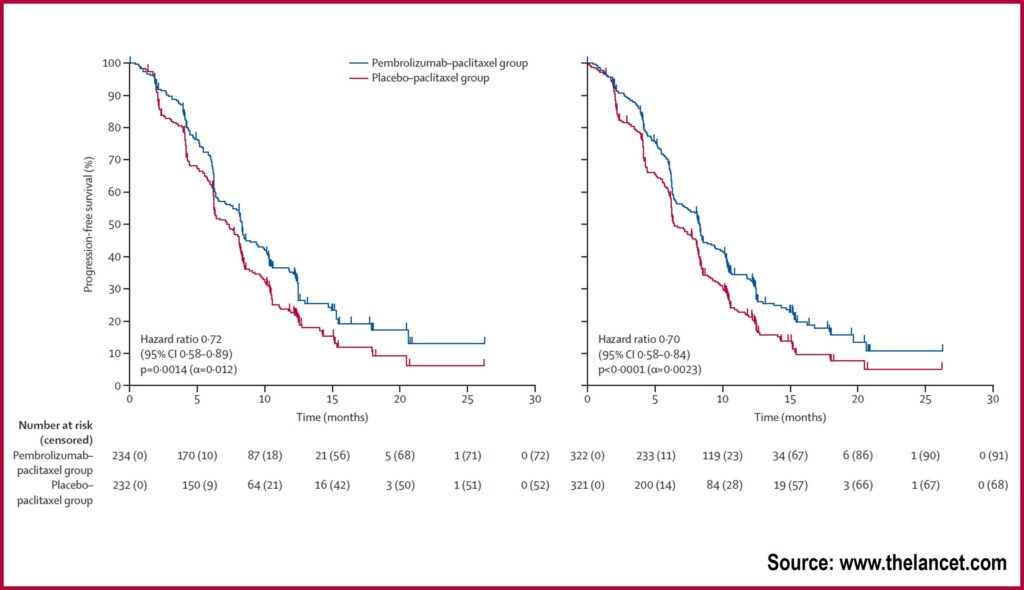
Results from the ENGOT-ov65/KEYNOTE-B96, recently published on The Lancet, demonstrate that pembrolizumab plus weekly paclitaxel, with or without bevacizumab, significantly improves progression-free survival and overall survival in patients with platinum-resistant recurrent ovarian cancer who had received one to two previous systemic regimens.
The ENGOT-ov65/KEYNOTE-B96 study is a multicenter, randomised, double-blind, phase 3 trial involving 643 women with histologically confirmed epithelial ovarian, fallopian tube, or primary peritoneal carcinoma, who received one to two previous systemic therapies including at least one platinum regimen and who progressed 6 months or less after the last platinum regimen. They were randomly assigned to pembrolizumab plus paclitaxel or placebo plus paclitaxel. In the first and second interim analysis, pembrolizumab plus paclitaxel significantly improved progression-free survival and overall survival versus placebo plus paclitaxel, in both the PD-L1 combined positive score 1 or higher. At the final analysis, overall survival was 17.7 months in patients treated with pembrolizumab plus paclitaxel and 14 months with placebo plus paclitaxel. Treatment-related adverse events occurred in 68% and 55% respectively, the most common of any grade being anaemia, peripheral neuropathy, alopecia, fatigue, and nausea. As authors conclude «In the phase 3 ENGOT-ov65/KEYNOTE-B96 trial, first-line pembrolizumab plus weekly paclitaxel, with or without bevacizumab, significantly improved investigator-assessed progression-free survival in both the PD-L1 combined positive score ≥ 1 and overall populations of patients with platinum-resistant recurrent ovarian cancer. This regimen achieved one of the longest reported overall survivals in this setting and demonstrated a manageable safety profile».