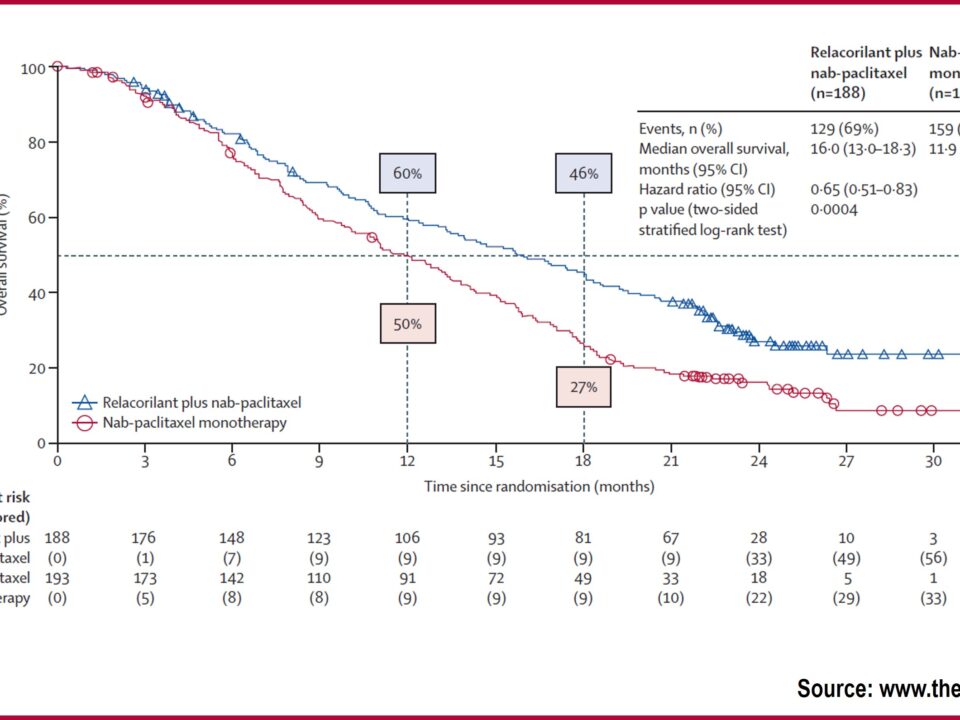
Relacorilant plus nab-paclitaxel in platinum-resistant ovarian cancer
07/09/2026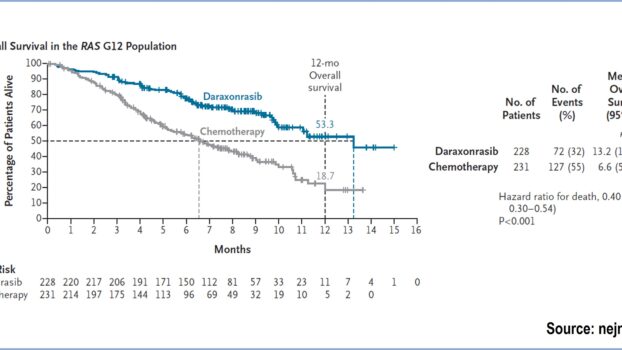
The oral RAS(ON) multi-selective inhibitor daraxonrasib shows a significantly longer overall survival and progression-free survival in patients with previously treated metastatic pancreatic ductal adenocarcinoma
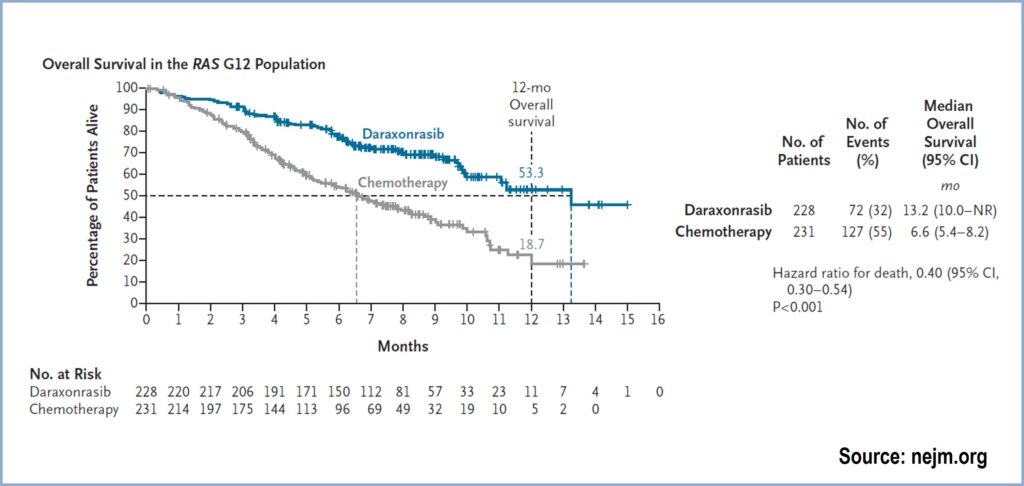
New data from the RASolute 302 trial, recently published on The New England Journal of Medicine, show a significantly longer overall survival and progression-free survival with the oral RAS(ON) multi-selective inhibitor daraxonrasib in patients with previously treated metastatic pancreatic ductal adenocarcinoma (mPDAC).
Daraxonrasib is a multi-selective inhibitor of RAS(ON) proteins and the first investigational agent in a novel class of RAS inhibitors designed to address a diverse and broad spectrum of oncogenic RAS drivers: more than 90% of patients with pancreatic cancer harbor tumors driven by mutations in RAS proteins. The RASolute 302 trial is a phase 3, international, open-label, randomized trial involving 500 patients (91.8% with RAS G12 mutations) randomly assigned to receive daraxonrasib or chemotherapy. The median overall survival in the RAS G12 population was 13.2 months with daraxonrasib and 6.6 months with chemotherapy, and the median overall survival in the overall population was 13.2 months and 6.7 months, respectively; the median progression-free survival in the RAS G12 population was 7.3 months with daraxonrasib and 3.5 months with chemotherapy, and that in the overall population was 7.2 months and 3.6 months, respectively. Treatment-related adverse events that led to treatment discontinuation occurred in 1.2% of the patients in the daraxonrasib group and in 11.2% of those in the chemotherapy group. As principal investigator and director of the Hale Family Center for Pancreatic Cancer Research at Dana-Farber Cancer Institute Brian M. Wolpin stated, «For patients with metastatic pancreatic cancer, new treatment options are urgently needed to increase survival time and improve quality of life. Daraxonrasib provides a clear and highly meaningful step forward for patients with pancreatic cancer who have experienced progression on prior treatment, typically chemotherapy».